
Inside the Minds of Gen Z Property Buyers


They're not just buying homes — they're curating belief systems. Here’s what that means for the future of real estate.
They're not just buying homes — they're curating belief systems. Here’s what that means for the future of real estate.
In the quiet corridors of real estate boardrooms, developers still speak in square meters, price per unit, and the tired promise of “location, location, location.” But outside — on TikTok feeds, in co-working cafés, across pop-up farmer’s markets and DMs — a new buyer is whispering a different language.
Meet Generation Z.
They were born between 1997 and 2012, shaped by algorithms, raised during economic turbulence, and empowered by a radical sense of individualism. They’re now entering the housing market in growing numbers — not with the starry-eyed optimism of their millennial siblings, but with a sharper lens. One that filters for value, ethics, and identity.
And here’s the twist: they’re not just looking for real estate. They’re looking for resonance.
The New Wishlist (Spoiler: It’s Not Granite Countertops)
Forget three-bedroom checklists and beige staging. Today’s Gen Z buyer is after a lifestyle that mirrors their values — even if it means compromising on space. A recent Zillow Consumer Housing Trends Report found that 68% of Gen Z buyers would choose a smaller home in a vibrant, walkable neighborhood over a larger home in the suburbs. That’s a seismic shift.
They’re drawn to:
Biophilic design
Passive house principles
Community-integrated retail
Minimalist interiors with locally-sourced materials
Green roofs and solar panels
Buildings with a social media presence (yes, really)
They are also digital natives who expect seamless online experiences — from virtual tours to docu-signing to Instagram-ready storytelling.
In fact, 83% of Gen Z renters say they discovered their current apartment online (RentCafe, 2023). This means if your marketing feels like a 2015 slideshow — or worse, a PowerPoint with logo watermarks — you’ve already lost them.
They Don’t Want to Be Sold — They Want to Believe
This is a generation deeply skeptical of performative branding. They’ve seen “eco” labels slapped on plastic packaging and “inclusive” campaigns featuring only models in size 0. So when a developer claims a project is “green” or “community-driven,” it better be true — and verifiable.
Take The Standard Residences in Miami, for example. Not just branded for design cachet, but intentionally designed around flexible ownership, hotel-like amenities, and social programming. It’s less “condo” and more “urban lifestyle experiment.”
Or consider Habitas, the hospitality-meets-holistic-living brand that designs off-grid properties using modular architecture, communal design, and a philosophy rooted in well-being and global citizenship. That’s the tone Gen Z responds to — ambitious, design-led, and meaningful.
A 2024 report by Ernst & Young found that 72% of Gen Z consumers are willing to pay more for products and services from companies that reflect their values. That includes real estate. Especially real estate.
Culture Before Concrete
What sells to Gen Z isn’t square footage — it’s storytelling. And here, most developers are still writing in corporate jargon while this generation reads Kinfolk, Apartamento, Dazed, and The Gentlewoman.
They’re influenced by fashion campaigns, architectural documentaries, and emerging artists on Instagram.
They follow brands like Aesop, Lemaire, Ganni, and Tesla, not because of what those brands sell — but because of how those brands feel.
So if your building has no mood, no philosophy, no reason to exist beyond units per floor… it's background noise.
What Developers Get Wrong
Let’s call it out:
Most branding is too generic.
Most visuals are too polished, too fake.
Most brochures say nothing.
And most “lifestyle imagery” looks like it came from a stock photo farm in 2010.
The Gen Z buyer sees through it in five seconds.
They’re not impressed by mockups of rooftop infinity pools if those amenities don’t align with the lived experience. They’ll scroll past the render, Google the developer, check your Instagram tone, stalk your other projects, read reviews on Reddit — and make a decision before you even get to pitch.
If your story isn’t consistent, you lose them.
Building for Belief
To build for Gen Z, you have to build beyond the blueprint. This means asking yourself:
What does our building stand for?
What culture are we creating here?
How are we communicating that visually and emotionally?
Is our design Instagrammable because it's authentic — or because we hired a stylist?
Because this generation isn't buying walls. They’re buying worldviews. And they want to live in places that affirm who they are — not just where they sleep.
The Opportunity
Developers who understand this shift stand to win big.
Why? Because Gen Z is massive — and growing. By 2030, they’ll account for 30% of the global workforce and hold $33 trillion in purchasing power (Bloomberg, 2024). They're not the future of the market — they're already here.
And yet, most of the real estate industry is still speaking to Boomers.
Final Thought
If you want to sell to Gen Z, don’t just build a product. Build a presence.
Create culture. Make architecture that has attitude, vision, and meaning.
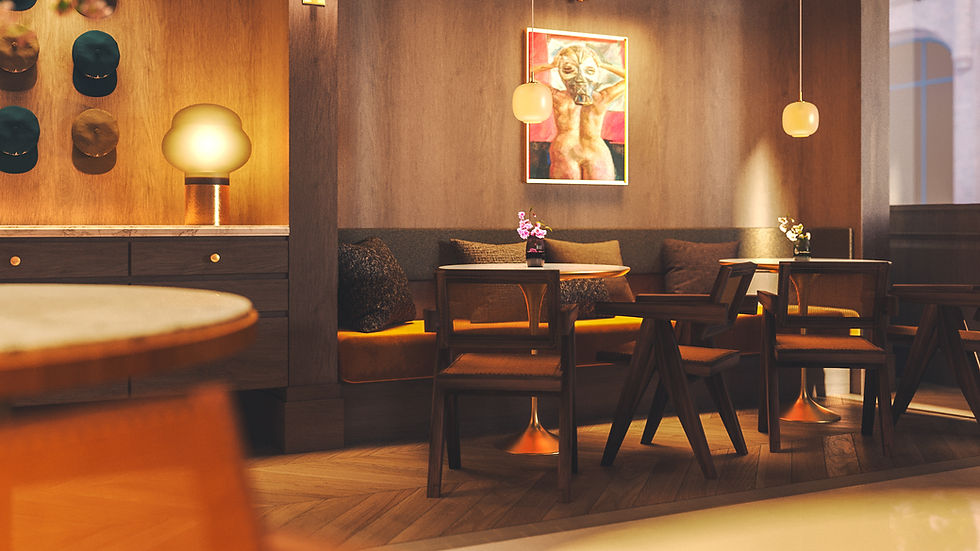
And tell that story with visuals that feel cinematic, not transactional.
At Xarp Studio, we help developers translate architecture into identity.
From high-concept renders to immersive branding narratives, we bring the kind of sophistication that Gen Z doesn’t just notice — they feel..


Comments